

Key takeaway: High-growth industries like IT and Healthcare now prioritize specialized certifications such as AWS or CompTIA A+ for immediate workforce entry. By combining these technical credentials with emotional intelligence, you will secure a competitive edge. Most programs offer flexible scheduling and federal WIOA grants, ensuring you boost your income potential without financial or professional burnout!
The gap between academic degrees and market needs is widening as 2026 approaches, with technical certifications now offering a faster return on investment than many four-year programs. High-growth sectors like IT and healthcare increasingly prioritize specific credentials over traditional diplomas to fill urgent roles.
Traditional four-year degrees no longer guarantee the career acceleration they once did. This guide breaks down how career development classes can sharpen your technical edge and leadership skills to help you secure a higher salary today. We will explore the best training paths to accelerate your professional growth together.
Career Development Classes for High-Growth Industries
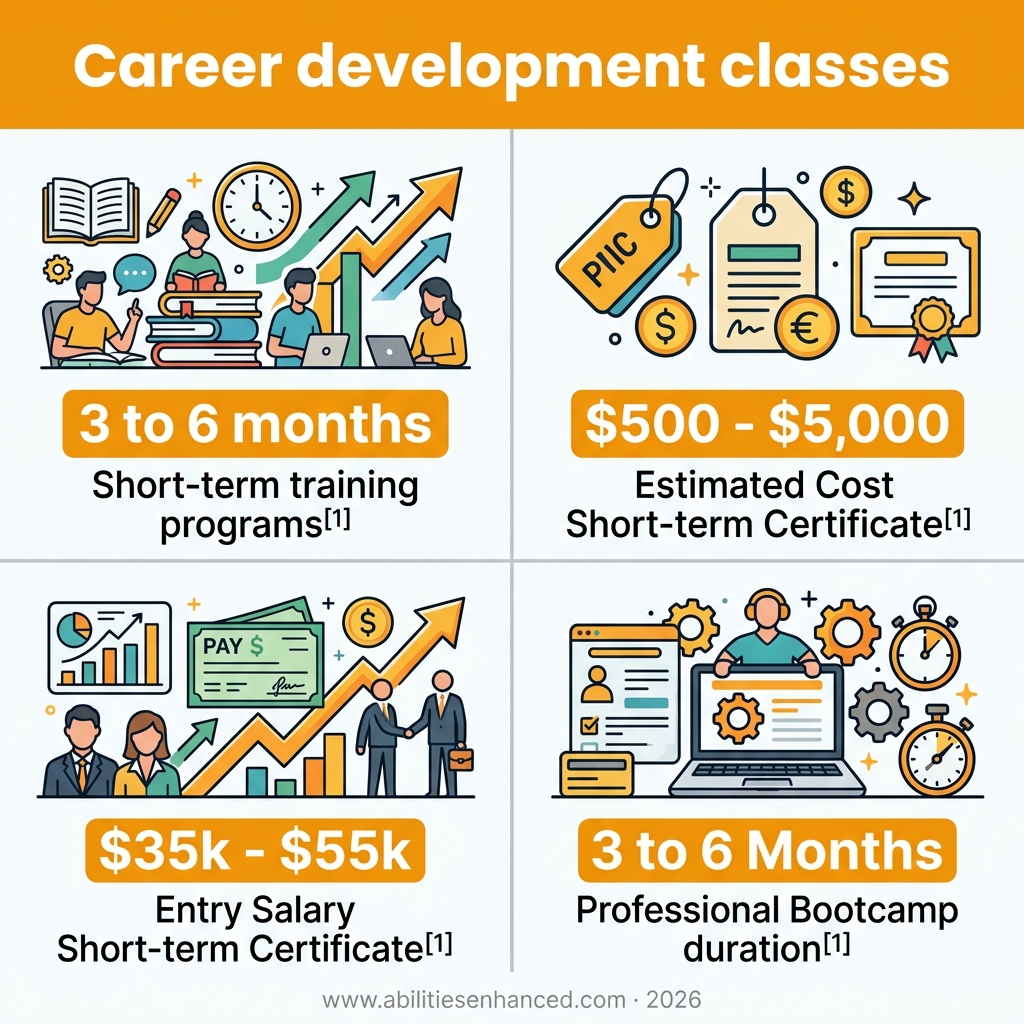
High-growth sectors like IT and Healthcare require specific certifications such as AWS, CompTIA A+, or CNA. Short-term training programs typically last 3 to 6 months, offering a direct path to salary increases and immediate placement in technical roles.
Moving from technical execution to strategic leadership requires a deliberate shift in your professional toolkit.
Specialized Certifications for High-Demand Sectors
IT and healthcare certifications dominate. Specific credentials like Cybersecurity or Nursing Assistant roles are booming. These certifications offer immediate market relevance for ambitious professionals.
Industry-specific credentials validate your expertise to recruiters instantly. They provide a massive competitive edge for management roles. Think of them as a verified seal of professional competence.
Enrollment is fast and accessible. These programs ensure quick workforce entry for those ready to pivot now.
Soft Skill Mastery for Modern Leadership
High-level roles demand Emotional Intelligence and Conflict Management. Leaders must handle remote team dynamics with precision today. Mastering these skills is essential for any modern executive.
Digital communication requires absolute clarity and empathy. You must project authority during virtual meetings. Success depends on how well you connect across digital channels.
Technical skills alone won’t secure your future. Long-term career stability relies on these interpersonal foundations. It is the difference between staying put and moving up.
Comparing Short-Term Certificates with Degree Paths
Technical and soft skills form the foundation, but your financial future depends on choosing the right credential path.
Evaluating Immediate ROI and Income Potential
Certificates demand less money and time than traditional degrees. They focus on practical skills for rapid market entry. You can start earning much sooner with this targeted approach.
Speed often comes at the cost of academic depth. Short courses offer fast employment access. Degrees provide the broad theoretical base required for sustained, long-term leadership growth.
| Path | Average Duration | Estimated Cost | Entry Salary | Best For |
|---|---|---|---|---|
| Short-term Certificate | Weeks to Months | $500 – $5,000 | $35k – $55k | Skill Pivoters |
| Associate Degree | 2 Years | $10k – $25k | $40k – $60k | Technical Roles |
| Bachelor’s Degree | 4 Years | $42k – $150k | $55k – $75k | Corporate Leaders |
| Professional Bootcamp | 3 to 6 Months | $10k – $15k | $60k – $80k | Tech Specialists |
Aligning Course Selection with Personal Strengths
Match your training to your natural talents using market demand data. Assessment tools like CliftonStrengths are vital for this strategy. Do not just follow trends; follow your actual strengths. High-impact career development classes work best when they amplify what you already do well.
Professional coaching is essential for identifying hidden blind spots. Coaches align your personal goals with realistic industry shifts. They help move you from a reactive mindset to a strategic career play.
The right fit ensures higher job satisfaction. It significantly reduces the real cost of future burnout and career inertia.
Managing Professional Development While Working
Finding the right path is one thing, but fitting it into a forty-hour work week is where the real challenge begins.
Flexible Scheduling for Busy Professionals
Balancing a career and growth is tough. Flexibility is the modern standard for adult education today. Most programs now cater specifically to full-time employees.
You can choose from several formats:
- Evening classes for local commuters
- Weekend intensives for rapid skill-building
- Hybrid models combining remote and in-person sessions
Success requires intentional time management. Set aside dedicated study blocks weekly. Use micro-learning techniques to stay consistent without feeling overwhelmed by your workload.
Accessing Grants and Workforce Development Funds
Federal and state grants fund many training initiatives. The WIOA (Workforce Innovation and Opportunity Act) is a major resource. These funds often cover the entire cost of certification. Check local American Job Centers for details.
Registration for these programs is straightforward. It usually starts with an eligibility interview. Gather your employment history and residency documents early to speed up the process.
Don’t overlook employer-sponsored tuition reimbursement. Many companies pay for career development classes that improve your current role’s efficiency. It is a mutually beneficial arrangement.
Boosting Income Potential Through Mentorship and Placement
Funding and scheduling are the logistics, but the real career leap happens when you connect classroom learning to workplace performance.
Integrating Practical Internships and Placement Support
Connect classroom theory with real-world internship experiences. Hands-on training is where concepts become skills. Most top-tier programs now include a mandatory practicum phase.
Career centers help with direct introductions to hiring managers. This drastically reduces the time spent in the « application black hole. »
Knowing you can do the job is different from knowing the theory. This confidence shines during high-stakes interviews.
Utilizing Professional Coaching for Successful Transitions
Coaching helps manage difficult career shifts. Transitions are often emotional and messy. A coach provides the objective strategy needed to stay on track. They focus on resume optimization and networking.
Networking is the hidden engine of the US job market. A coach teaches you how to tap into it effectively. These career development classes turn hidden opportunities into tangible offers.
Specialized certifications combined with emotional intelligence create the fastest route to high-growth leadership. The next step is yours: utilize WIOA grants or employer funding to enroll in career development classes today. Rather than waiting for the perfect moment, start building the skills that will define your next decade of professional success.
FAQ
What are the best career development classes for high-growth industries?
To thrive in today’s market, you should focus on specialized certifications in IT and Healthcare. Top-tier options include the MIT Health Care AI Certificate, AWS Cloud Practitioner, or CompTIA A+ for technical roles. These programs provide the immediate market relevance needed to secure high-paying positions in sectors that are expanding rapidly.
If you are looking for leadership growth, classes focusing on emotional intelligence and conflict management from providers like IBM or Macquarie University are essential. These courses ensure you possess the interpersonal mastery required to lead modern, often remote, teams effectively!
How do short-term certificates compare to traditional degrees in terms of ROI?
Short-term certificates offer a lightning-fast Return on Investment (ROI) because they typically last only 3 to 6 months and cost significantly less than a four-year degree. They are the perfect solution if you want to enter the workforce quickly or pivot your career without taking on massive debt. You will see an immediate impact on your earning potential!
While degrees provide a broader theoretical foundation for long-term executive mobility, certificates allow you to stack specific skills as the market evolves. Many professionals now use « stackable credentials » to combine the speed of a certificate with the prestige of a degree, maximizing both immediate income and future stability.
Can I get financial assistance for professional development classes?
Absolutely! You should explore federal and state grants provided under the Workforce Innovation and Opportunity Act (WIOA). These funds are specifically designed to cover the costs of training for high-demand roles. I highly recommend visiting your local American Job Center to verify your eligibility and start the application process.
Don’t forget to check with your current employer as well. Many organizations offer tuition reimbursement for classes that improve your efficiency or prepare you for internal promotion. It is a win-win strategy that builds your resume while the company covers the bill!
How can I manage career classes while working a full-time job?
Flexibility is now the industry standard for adult education! You can choose from asynchronous online modules, weekend intensives, or hybrid models that fit perfectly into a busy forty-hour work week. The key is to utilize micro-learning techniques to maintain consistency without burning out.
I suggest setting dedicated study blocks and using tools like LinkedIn Learning or Coursera to progress at your own pace. By integrating learning into your daily routine, you can master new skills and prepare for your next career leap without sacrificing your current professional responsibilities.
What specific skills are most valuable for career advancement today?
Beyond technical expertise, you must master soft skills such as strategic communication, resilience, and time management. Employers are actively seeking leaders who can navigate workplace dynamics and use constructive feedback for growth. Programs like those from the University of Leeds or IBM focus specifically on these interpersonal power skills.
Additionally, personal branding and networking mastery are the hidden engines of the US job market. Learning how to optimize your LinkedIn profile and build a professional portfolio will ensure your hard-earned skills get noticed by the right recruiters and decision-makers!
Commentaires récents