

L’essentiel à retenir : Anchor your salary discussions with precise, data-backed figures to shift the conversation from cost to value. By exploring total compensation—including equity and flexible PTO—you align your pay with market reality. This approach secures long-term wealth and professional respect. Notably, using precise numbers like $102,500 demonstrates deeper research than rounding to the nearest thousand.
Most professionals leave thousands of dollars on the table because they treat salary negotiation as a one-time event rather than a strategic skill. Mastering salary negotiation transforms your professional trajectory by leveraging precise data from Glassdoor or Payscale to anchor your worth effectively. This guide provides the strategic blueprint to navigate counter-offers and secure a total compensation package that reflects your true impact.
Market Intelligence: Establishing Your Real-World Value
Negotiation is never about greed; it is about aligning your compensation with current market realities. View this dialogue as a necessary calibration of your professional worth.
Benchmarking Your Worth: Data-Driven Research Techniques
Leverage platforms like Glassdoor or Payscale to identify the median salary for your role. Data is your shield. It transforms a subjective request into an objective market requirement.
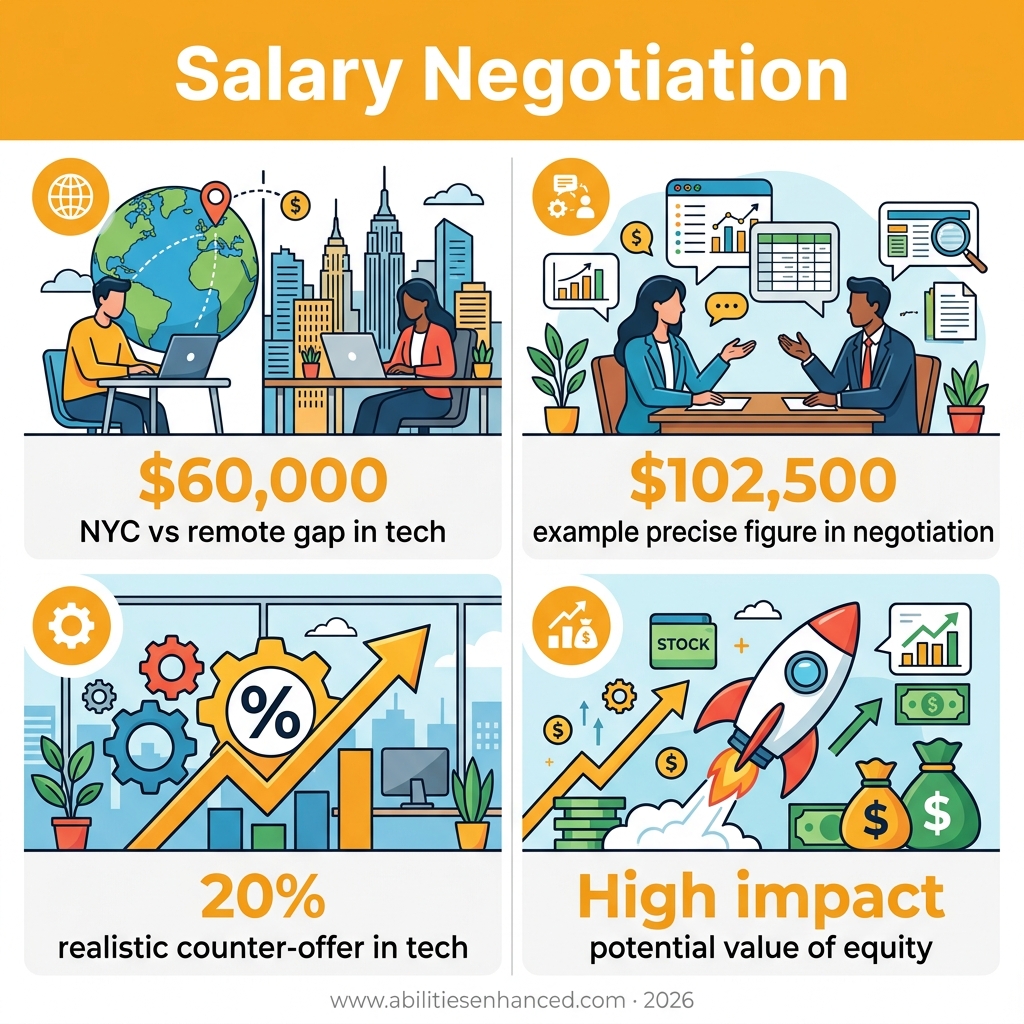
The NYC versus remote pay gap is significant, often reaching $60,000 in tech. Certifications further boost your baseline. Geographic context matters for your final number because cost of living dictates local purchasing power.
Specialized experience remains a primary driver of income. Years spent mastering niche skills translate directly into negotiation leverage during high-stakes discussions.
The Investment Mindset: Shifting From Cost to Value
Stop seeing your salary as a drain on the company. Frame yourself as a revenue generator. Show them the clear ROI of hiring your specific expertise.
A high starting base creates a powerful compounding effect. Small wins today mean massive gains over decades. Long-term wealth starts with one strategic conversation during the hiring phase.
Use concrete past achievements to prove your worth. Numbers speak louder than vague promises of hard work or general dedication to the mission.
You are a high-value asset, not a line-item expense. Confidence changes the dynamic and forces a peer-to-peer professional exchange.
Strategic Dialogue: Mastering the Art of the Ask
Once you know your value, the focus shifts from « what » to « how » and « when » you present your case.
Perfect Timing: When to Trigger the Conversation
Never talk money before the written offer arrives. Your leverage is highest when they want you. Patience is a strategy in hiring.
Discuss annual reviews as the perfect window for raises. Link your request to recent wins. Timing determines the outcome of your request.
Use enthusiasm to soften the request. Be excited about the role but firm on the math. Positive energy prevents defensive reactions from HR.
Anchoring Techniques: Influencing the Employer’s Range
Set the ceiling by providing the first high-end figure. This « anchors » the discussion in your favor. Avoid round numbers like $100k. Precise figures suggest you have done deep homework.
Handle salary history questions with grace. You don’t have to reveal your past pay. Focus on the market rate for the new role.
Successfully pivot the salary negotiation by focusing on these strategic moves:
- Use precise numbers (e.g., $102,500)
- Pivot from history to future value
- State your range clearly
How to Handle Rigid Salary Structures and Low Offers?
Not every offer will meet your expectations immediately, so you need a plan for the « no » or the « low. »
Counter-Offer Strategy: Responding to Low-Ball Figures
Acknowledge the offer with sincere gratitude first. Then, pivot to the gap in compensation. Professionalism keeps doors open even during disagreements.
Use role-playing scripts to practice your tone. Stay collaborative rather than confrontational. Firmness and kindness can coexist in a negotiation.
Evaluate if a 20% counter-offer is realistic for your field. Tech might allow it; non-profits might not. Contextual awareness prevents you from looking out of touch with reality.
Breaking Barriers: Overcoming the Money Taboo
Money isn’t a dirty word in business. Stop feeling greedy for asking for your worth. Reframing the conversation reduces your internal anxiety.
View the talk as a standard business transaction. It is not a personal favor or a gift. Business logic beats emotional fear every time.
Maintain etiquette to protect your reputation. A polite « no » is better than a rude « yes. » Character matters.
Focus on the mutual benefit. Success is a two-way street.
Total Compensation: Negotiating Beyond the Base Salary
When the base salary hits a hard limit, smart negotiators look at the rest of the pie to find hidden value.
Hidden Perks: Bonuses, Equity, and Professional Growth
Ask for a sign-on bonus to bridge a salary gap. This is a one-time cost for them. Creative solutions solve budget deadlocks quickly.
| Benefit Category | Potential Value | Negotiation Lever |
|---|---|---|
| Equity/Stocks | High impact | Long-term wealth alignment |
| Performance Bonuses | Medium to High | Tied to specific KPIs |
| Professional Development | Medium impact | Future marketability boost |
| Retirement Match | Medium impact | Immediate financial gain |
Request a budget for certifications or degrees. Upskilling is a long-term investment in your future marketability.
Lifestyle Benefits: PTO and Flexible Work Arrangements
Extra vacation days have high personal value. They often cost the company very little. Time is a currency you should definitely spend.
Secure remote work or flexible hours in writing. This saves you commuting costs and stress. Work-life balance is a non-monetary raise.
- Home office stipends
- Wellness/Gym memberships
- Commuter benefits
Get every detail in the final contract. Verbal promises don’t pay the bills.
Start by anchoring your next discussion with precise, data-backed figures. Build your total compensation strategy around flexible perks, growth budgets, and lifestyle benefits. One confident conversation today sets the foundation for decades of financial growth—take action now and secure the professional rewards you have earned.
FAQ
How can I accurately determine my current market value?
To establish your real-world value, you must leverage data-driven research. Utilize platforms like Glassdoor and Payscale to find the median salary for your specific role, but remember that geographic context matters immensely. For instance, the pay gap between a major hub like NYC and a remote position can be significant due to the local cost of living.
Beyond general data, look at specialized certifications and your total years of experience. These factors translate directly into negotiation leverage. Your goal is to enter the room with a clear salary range—a minimum acceptable floor and a desired maximum—backed by concrete market realities.
What is the best way to handle questions about my salary history?
When a recruiter asks about your past pay, you are not obligated to reveal it. Instead, pivot the conversation toward the market rate for the new role and the specific value you bring to the table. Shifting the focus from your history to your future ROI is a powerful way to maintain your professional standing.
Use precise figures (like $102,500 instead of $100,000) when discussing your expectations. Research from the Columbia Business School suggests that precision acts as a strong psychological anchor, signaling that you have done your homework and are making a calculated, data-backed request.
When is the most strategic time to talk about money during the hiring process?
Patience is a strategy. You should generally avoid discussing specific numbers until a written offer is on the table, as your leverage is highest once the company has decided they want you. If the recruiter insists on a figure early on, provide a range rather than a fixed amount to keep the dialogue flexible.
For current employees, annual reviews are the perfect window to trigger a raise conversation. Link your request to recent wins and concrete past achievements. By maintaining a collaborative and enthusiastic tone, you prevent defensive reactions and frame the increase as a logical business investment.
What should I do if the base salary offer is lower than I expected?
First, acknowledge the offer with gratitude to keep the doors open. Then, professionally pivot to the compensation gap by presenting a well-argued counter-proposal. Highlight your unique skills and the revenue-generating potential you offer the company to justify a higher figure.
If the company has a rigid salary structure and cannot budge on the base pay, don’t walk away yet. Explore creative solutions like performance bonuses, sign-on bonuses, or accelerated career growth reviews. Firmness and kindness can coexist, allowing you to negotiate a package that reflects your true worth.
Can I negotiate benefits other than just my base salary?
Absolutely! When the base salary hits a limit, look at the full financial picture. You can negotiate for equity/stocks, higher retirement matches, or a dedicated budget for professional development and certifications. These « hidden perks » often provide massive long-term value and are easier for some departments to approve.
Don’t forget lifestyle benefits which serve as a non-monetary raise. You can ask for:
- Remote work or flexible hours to save on commuting costs.
- Additional Paid Time Off (PTO) beyond the standard package.
- Home office stipends or wellness/gym memberships.
Always ensure every detail is included in the final written contract, as verbal promises are not binding.
Commentaires récents