
Key takeaway: Choose a resume format that mirrors your career goals! Use chronological layouts for steady growth, functional structures to mask gaps, or hybrid versions. Tailor every document with strategic keywords to beat ATS filters and grab attention instantly. Transform your professional story into a powerful value proposition today!
Most recruiters scan a CV in under a minute before shortlisting candidates. Your professional story deserves better than a poor layout that buries your greatest achievements under a mountain of text. The right structure transforms your experience into an immediate value proposition.
I will help you master the different resume writing types to ensure your profile stands out instantly! We are going to break down the best formats for career changers and executives so you can secure that dream interview today.
Master the Standard Resume Types for Your Career Stage
Chronological formats work best for most traditional career paths, while functional layouts hide gaps for career changers. Hybrid versions combine both, emphasizing skills through a summary before detailing reverse-chronological work history.
The chronological format remains the gold standard for most American recruiters.
Stick to the Classic Chronological Format for Steady Growth
The reverse-chronological layout is the most common choice. It lists your jobs starting from the most recent. This structure provides immediate clarity for hiring managers reviewing your path.
Recruiters prefer this because it highlights career progression. It effectively demonstrates professional stability over time. Use this to prove you are ready for the next level!
Shift Focus With a Functional Skills-Based Layout
This skills-centric approach de-emphasizes specific dates. It is perfect for non-linear paths or career pivots. You must focus on transferable competencies rather than just listing past job titles.
The core components include a robust competency section. This specialized block replaces the heavy work history. It ensures your talents shine regardless of employment gaps!
Bridge the Gap Using a Combination Hybrid Structure
This format balances a strong professional profile with history. It starts with a powerful summary of your achievements. A brief chronological list of your past roles follows below.
You merge the two styles perfectly here. Back up your functional skills with chronological evidence today. It is the ultimate strategy for experienced pros seeking maximum impact!
Select the Right Format for Your Specific Professional Situation
Choosing a layout isn’t just about aesthetics; it is about your unique career story.
Pivot Careers or Handle Employment Gaps with Confidence
Strategic layouts mask breaks effectively. Use a functional approach to highlight relevant skills immediately. Never lie about dates, but shift the visual focus toward your actual capabilities.
Plan your transition back. As you gain fresh experience, move toward a chronological format. This restores recruiter trust quickly.
Always emphasize honesty. Keep gaps brief. Focus on personal projects or freelance work.
Scale Your Impact From Entry-Level to Executive Roles
Graduates focus on education and internships. Conversely, executives must highlight strategic leadership and revenue growth. The stakes are much higher at the top.
Include board memberships or major keynote speeches. Use executive presence as a key concept to anchor the section. It is about proving your long-term value.
| Career Stage | Recommended Format | Key Focus | Visual Priority |
|---|---|---|---|
| Recent Graduate | Chronological | Education | Academic Honors |
| Career Changer | Hybrid | Skills | Transferable Talent |
| Senior Executive | Hybrid / Chronological | Results | Revenue Impact |
| Freelancer | Functional / Project-based | Projects | Client Success |
Distinguish Between a Standard Resume and a CV for Academia
Length differences are vital. Resumes are brief and punchy. A Curriculum Vitae is a comprehensive record of academic and research achievements over time.
List unique sections clearly. Mention peer-reviewed publications, grants, and teaching experience. These are mandatory for scientific roles but unnecessary for corporate jobs.
How Do You Optimize Your Resume for Modern Hiring Systems?
Even the best layout fails if a computer cannot read it properly. Modern recruitment relies on speed and precision, meaning your document must be technically flawless to even reach a human desk.
Beat the Applicant Tracking Systems with Strategic Keywords
ATS software acts as a digital gatekeeper. It scans for specific keywords and standard headings to categorize candidates. Fancy graphics often confuse these systems, leading to immediate rejection.
Identify skill placement carefully. Blend hard skills and soft skills throughout the text. This strategic placement increases your relevancy score significantly.
- Use standard fonts like Arial or Calibri
- Avoid tables or columns for ATS-only versions
- Use exact job titles from the description
- Save as a .docx or PDF as requested
Craft a Professional Profile That Demands Immediate Attention
Define the modern profile clearly. Forget the old objective statement. A professional summary should highlight your value proposition immediately. It tells the recruiter what you bring to the table right now.
Show how to inject branding. Use a short, punchy sentence. This creates a memorable first impression that sticks.
Tailor a Targeted Resume for Every Specific Job Application
Demonstrate mirroring language. Look at the job description closely. Use the same industry terminology to prove you are a perfect match for the role.
Explain why generic documents fail. Recruiters spot a template approach instantly. Customization shows genuine interest in the specific company and the unique challenges they face.
Avoid Common Pitfalls and Explore Creative Alternatives
Small mistakes can overshadow great experience. Strategic experimentation with format can set you apart in the right contexts.
Eliminate Formatting Errors and Grammatical Blunders Instantly
Stop sabotaging your chances with sloppy layouts. Check your margins and font sizes carefully. Typos in your contact info are the most common reason for missed calls!
Does color belong on a resume? A little color can help visual hierarchy. However, keep it professional and avoid distracting graphics in conservative industries. Stay sharp and focused.
Start every bullet with strong verbs. This creates impactful descriptions. Action is everything!
- Double-check for consistent date formats
- Use 10-12pt font for body text
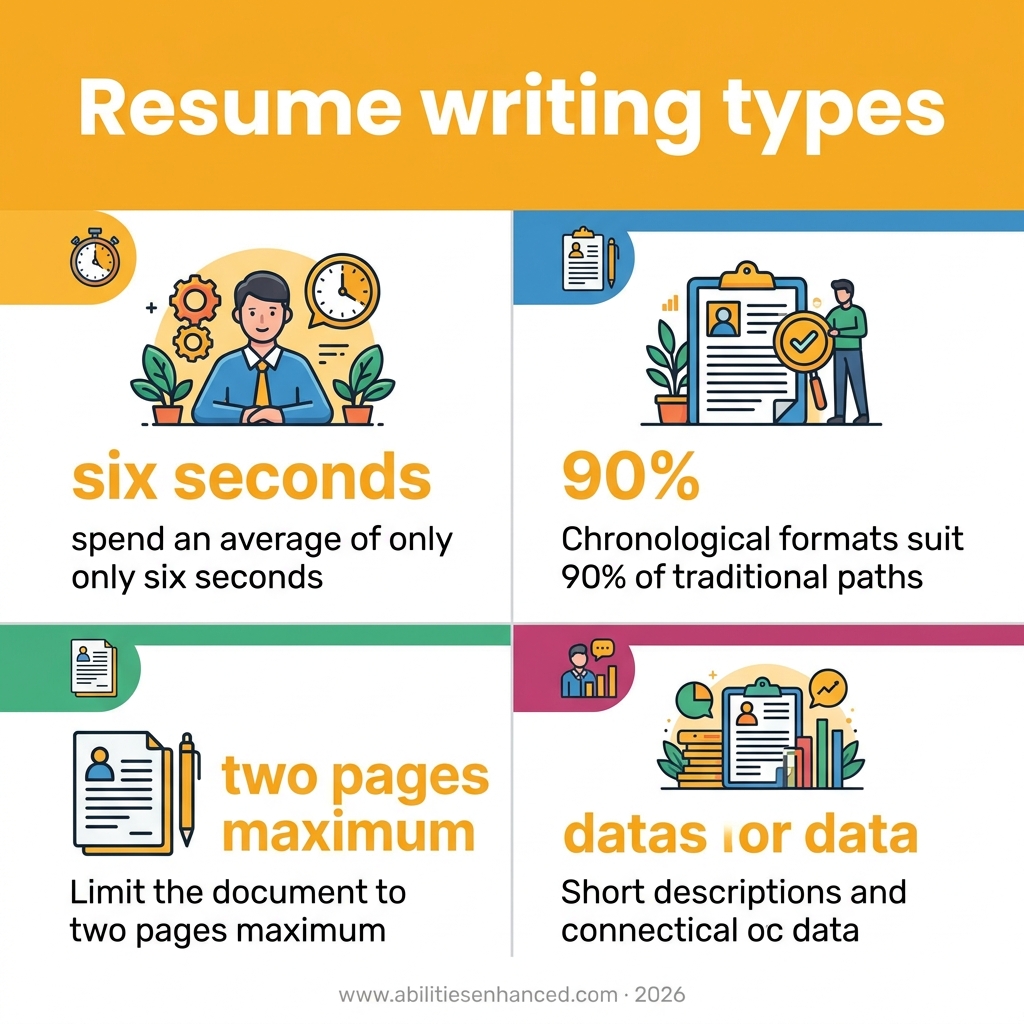
- Limit the document to two pages maximum
- Proofread for « their/there » and « your/you’re » errors
Experiment with Video or Infographic Resumes in Creative Fields
Identify when non-traditional formats help. Design and tech roles often welcome infographic resumes. They showcase your visual storytelling skills. But always keep a standard text version ready for the formal application portal. Be ready for anything!
Only use video if you are comfortable on camera. It must look high-quality. Your personality should shine through clearly.
Match the format to the company culture. Research the industry standards first. Success requires a strategic resume writing types approach!
Mastering these resume writing types gives you control over your career narrative. Start by auditing your current document against the three core formats, then test your optimized version with an ATS scanner before your next application. The investment in strategic formatting today determines which opportunities reach your inbox tomorrow.
FAQ
Which resume format should I choose for my professional situation?
Selecting the perfect layout is about your unique career story! Use a chronological format if you have a steady work history, as it is the gold standard for most recruiters. If you are pivoting careers or have gaps, a functional layout highlights your transferable competencies instead of dates. For experienced pros, a hybrid structure offers the best of both worlds by merging a skills summary with a clear timeline.
When is a functional resume format best for career changes or employment gaps?
The functional format is your secret weapon for a successful pivot! It de-emphasizes dates to focus on your relevant skills and potential. This approach allows you to mask breaks in your timeline by grouping achievements under competency headers. Stop worrying about the « when » and start showing the « how » to restore recruiter trust immediately!
Should I use an infographic resume for creative job applications?
Innovation has its place, especially in design and tech! Infographic resumes showcase your visual storytelling skills and help you stand out in creative fields. However, always keep a standard text version ready for online portals. Most Applicant Tracking Systems struggle with graphics, so use the creative version for direct networking or your personal portfolio!
How do I make sure my resume passes through Applicant Tracking Systems (ATS)?
Beat the bots by keeping it simple and strategic! Use specific keywords from the job description and stick to standard fonts like Arial or Calibri. Avoid complex tables or distracting graphics that confuse the software. Saving your document as a .docx or PDF ensures the system scans your hard skills correctly, boosting your relevancy score instantly!
What is the main difference between a standard resume and a CV?
Size and scope are the keys! A resume is a brief, punchy document tailored for corporate roles. In contrast, a Curriculum Vitae is a comprehensive record used for academia and research. It must include peer-reviewed publications, grants, and teaching experience. Choose the resume for business impact and the CV for scholarly depth!
How can I avoid common formatting errors that hurt my chances?
Small mistakes can overshadow great experience! Always double-check your margins and font sizes for a clean, professional look. Start every bullet point with strong action verbs to create impactful descriptions. Most importantly, proofread for typos in your contact info, don’t let a simple error cost you your dream interview!
Commentaires récents