

The essential takeaway: successful career growth requires aligning your professional identity with a data-driven skills gap analysis. By transforming self-reflection into SMART milestones and leveraging AI tools, you create a high-impact roadmap. This structured approach ensures long-term market viability, turning vague aspirations into a concrete 12-month action plan that secures both personal fulfillment and organizational support.
Modern professionals frequently face stagnant growth, yet a structured career development planner effectively aligns personal aspirations with strategic organizational goals to restore momentum. I have seen how mapping your skills and values transforms a vague ambition into a high impact roadmap for success. This guide provides the tactical tools you need to audit your professional identity and pitch your growth plan with absolute confidence.
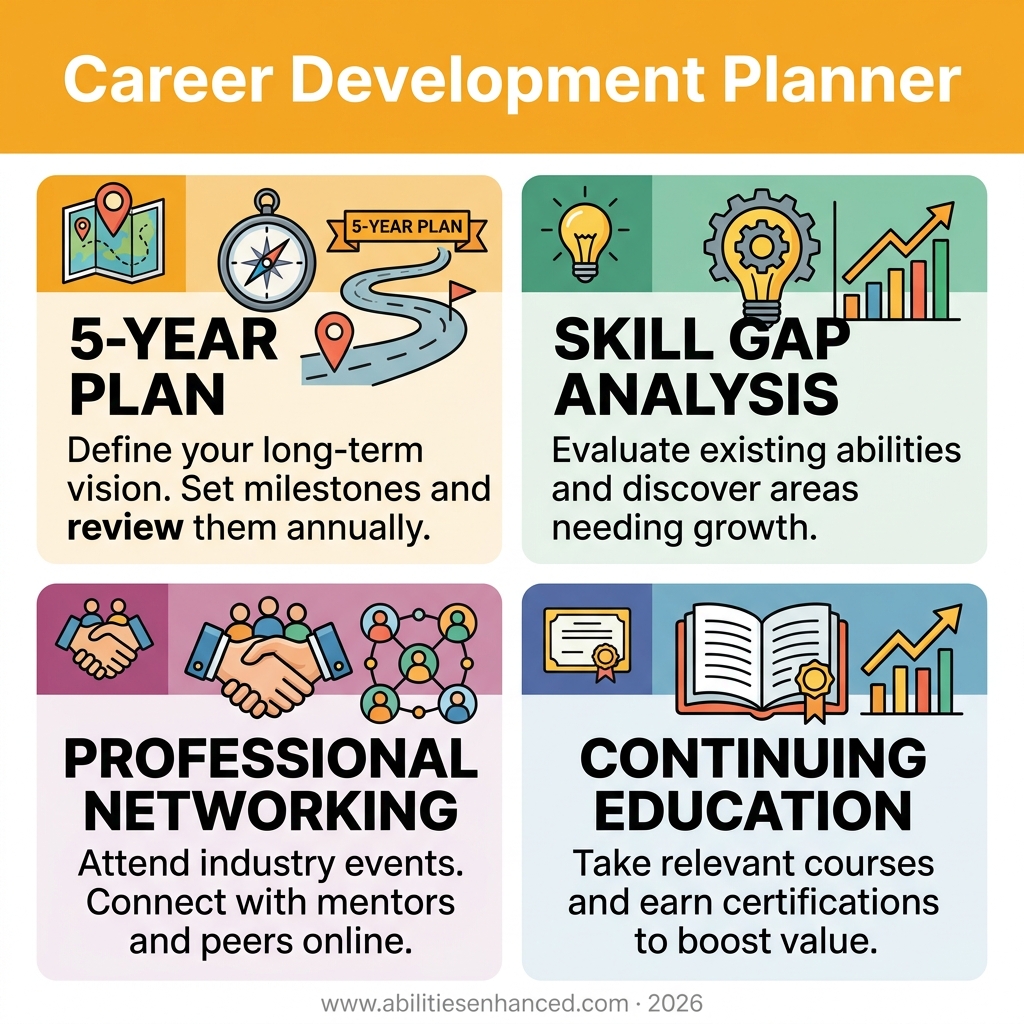
Audit Your Professional Identity Before Drafting a Career Development Planner
A high-impact career plan transcends mere salary bumps or title changes. True professional growth stems from deep alignment between your daily output and your authentic self.
Uncovering Your Career Identity Through Self-Reflection
Success requires a clear professional « why » rooted in your core values. Defining these personal interests creates a stable foundation for every future pivot. Without this, you are just drifting.
Ask yourself what truly excites you versus what others expect. Be brutally honest about your motivations to avoid the trap of societal pressure. This clarity is your best defense against burnout.
Connect these internal traits to specific environments. Some professionals thrive in high-risk startups while others require corporate stability. You must choose the structure that feeds your specific identity.
Alignment is non-negotiable. Your career must reflect your soul.
Performing a Skills Assessment to Find Hidden Gaps
Inventory your technical and soft skills with total objectivity. Compare this list against the current demands of your target industry. Do not sugarcoat the results or ignore your weaknesses.
Identify the delta between your current standing and your dream role. This specific gap becomes your strategic roadmap. Focus on the missing pieces that prevent you from reaching the next level.
Organize your findings into three clear buckets: keep, improve, or acquire. This structure transforms an overwhelming workload into a manageable, step-by-step process. It turns career inertia into measurable momentum.
Focus on these markers:
- Technical skills inventory
- Soft skills evaluation
- Industry-standard certification gaps
- Transferable experience markers
A career development planner is only as strong as the data you feed it.
How to Set High-Impact Career Goals That Actually Stick
Now that you know who you are and what you lack, it is time to turn those insights into concrete targets.
Balancing Short-Term Needs With Long-Term Trajectory
Focus on immediate wins to build momentum. These small victories keep you motivated during the long haul. Don’t try to change everything in one single week.
Create a hierarchy of objectives. This prevents professional burnout by ensuring you aren’t chasing too many rabbits at once. Prioritize the goals that offer the highest return on investment.
Distinguish between realistic milestones and purely aspirational dreams. It’s good to aim high, but your plan needs feet on the ground. Be ambitious yet grounded in reality.
Practicality beats perfection. Keep your eyes on the prize but watch your step.
Aligning Personal Values With Market Demand
Research current industry trends. You need to validate that your goals are actually viable in the current economy. Passion is great, but a paycheck is necessary.
Adjust your aims based on data-driven insights. Future-proofing your career means looking at where the money is moving. Don’t get stuck in a dying field because of nostalgia.
Verify that your chosen path offers the work-life balance you crave. A high-paying job is worthless if you have no time to spend the money. Check the culture.
| Goal Type | Market Viability | Value Alignment | Action Required |
|---|---|---|---|
| Management roles | High | High | Leadership training |
| Technical specialization | High | Medium | Niche certification |
| Freelancing | Medium | High | Personal branding |
| Career pivot | Low | High | Skill gap analysis |
Success requires a career development planner mindset. Align your soul with the market to win.
Build a Timeline-Based Roadmap for Your Professional Growth
Goals are just wishes without a date, so let’s put your ambitions on a calendar that makes sense.
Designing a 12-Month Action Plan With Measurable Milestones
Break your objectives into monthly tasks. This turns a daunting mountain into manageable hills. Consistency beats occasional intensity every single time.
Set clear metrics to track progress. Celebrate small victories to keep your drive high. If you cannot measure it, you will likely never finish it.
Review your plan regularly to adjust. New opportunities often appear unexpectedly. Stay flexible enough to pivot when a better door opens.
Time is currency. Spend it on tasks that move the needle. Focus on results.
Using AI Tools for Personalized Skill Mapping and Exploration
Use modern AI platforms to find emerging roles. These tools spot certifications you might miss. Stay ahead by using technology to your advantage.
Automate your discovery of learning resources. Tailor these to your specific gaps for efficiency. Algorithms find courses faster than any manual search could.
Map career pivots using data-driven software. See where professionals with your background actually go. It provides a reality check on what is probable.
Your career development planner should leverage these specific capabilities:
- AI-driven role discovery
- Automated course curation
- Career pathing simulations
- Skill gap visualization tools
Strategies to Gain Support and Maintain Momentum
You can’t do this entirely alone; you need the right people in your corner to open the heavy doors.
Pitching Your Growth Plan to Your Current Manager
Frame your development needs as benefits to the organization. Show them how your growth helps the bottom line. Managers love employees who solve problems before they even happen.
Request precise resources like a budget for certifications. Be specific about the time you need for training. Vagueness is the enemy of approval, so come prepared with hard numbers.
Handle common objections if formal programs are missing. Propose a pilot project or a low-cost alternative. Show initiative and they will likely find a way to support your ambition.
Negotiation is an art. Make it impossible for them to say no to your growth.
Building a Feedback Loop With Mentors and Networks
Identify key stakeholders and mentors. You need people who can provide objective and sometimes harsh critiques. Flattery won’t help you grow, but honest feedback definitely will in the end.
Use professional networking to find stretch opportunities. Look outside your current role for projects that test your limits. Growth happens at the edge of your comfort zone, so go there often.
Incorporate regular feedback to refine your development cycle. A plan is a living document, not a stone tablet. Adjust your course based on the wisdom of those who’ve been there.
Refining your career development planner requires consistent external input to stay sharp and relevant:
- Monthly mentor check-ins
- Peer review sessions
- Industry networking events
- LinkedIn engagement strategies
By auditing your professional identity, closing skill gaps, and setting SMART milestones, you transform vague ambitions into a strategic roadmap. Start your 12-month career development planner today to align your values with market demands and secure mentorship. Your future success is a choice made through consistent, daily action.
FAQ
What exactly is a career development planner and why do I need one?
Think of a career development planner as your personalized professional roadmap. It is a structured process designed to bridge the gap between where you are now and where you want to be by aligning your personal aspirations with strategic milestones. By defining clear short-term and long-term goals, you create a powerful sense of direction that boosts your motivation and retention within any organization.
Without a plan, you are simply reacting to the market; with one, you are taking command of your trajectory. It involves self-assessment, skill development, and networking to ensure every move you make is intentional. This roadmap doesn’t just help you find a job—it helps you build a legacy that reflects your core values and professional identity.
How can I perform a deep audit of my professional identity?
To build a foundation that lasts, you must look beyond your current job title. I recommend starting with self-reflection exercises like the « Ten I Am Statements » or the « Title You Truly Are » activity. These tools help you uncover your « professional why » by separating your official role from your actual strengths and values. Understanding whether you thrive in high-stakes startups or stable corporate environments is essential for preventing future burnout.
I also suggest utilizing validated tools like the O*NET Interest Profiler or the 16Personalities test to gain objective insights into your traits. By analyzing your interests, skills, and values, you can ensure your career path isn’t just profitable, but deeply fulfilling. Remember, an honest audit is the only way to identify the hidden gaps holding you back from your next big promotion.
Which tools can help me identify and bridge my skill gaps?
We live in an era of incredible resources, and you should use them to your tactical advantage! For technical and digital mastery, platforms like Google SkillShop, HubSpot Academy, and Pix offer specialized certifications that prove your value to recruiters. If you are looking to refine your soft skills or leadership potential, Pymetrics and SHL Talent Assessment provide data-driven insights into your emotional intelligence and situational judgment.
For a more comprehensive transformation, consider a formal skills assessment or a « bilan de compétences. » These structured evaluations help you categorize your abilities into three buckets: skills to keep, those to improve, and entirely new ones to acquire. Using AI-driven platforms can further streamline this by suggesting the exact certifications you need to stay ahead of industry trends.
How do I gain my manager’s support for my growth plan?
The secret to a successful pitch is framing your growth as a win for the organization. When you meet with your manager, don’t just ask for a favor; show them how your new skills will solve existing problems and improve the bottom line. Come prepared with specific requests, such as a budget for professional certifications or dedicated time for training, backed by hard numbers and clear objectives.
If formal programs don’t exist yet, take the initiative! Propose a pilot project or a low-cost alternative to demonstrate your commitment. By showing that you are proactive about your performance evaluation and career trajectory, you make it nearly impossible for leadership to say no to your advancement. Negotiation is an art, and your preparation is the brush.
How often should I review and adjust my career roadmap?
Your career plan is a living document, not a stone tablet! I recommend scheduling monthly check-ins with mentors and quarterly deep dives into your own progress. The market moves fast, and new opportunities will appear that you couldn’t have predicted. Regular reviews allow you to remain adaptable and pivot when a more lucrative or fulfilling door opens.
Consistency is the engine of success. By breaking your large 12-month objectives into measurable monthly milestones, you maintain momentum and celebrate small victories. If your circumstances change or industry demand shifts, don’t be afraid to re-align your goals. Staying grounded in reality while reaching for your ultimate aspirations is the hallmark of a high-impact professional.
Commentaires récents